Pickled Limes

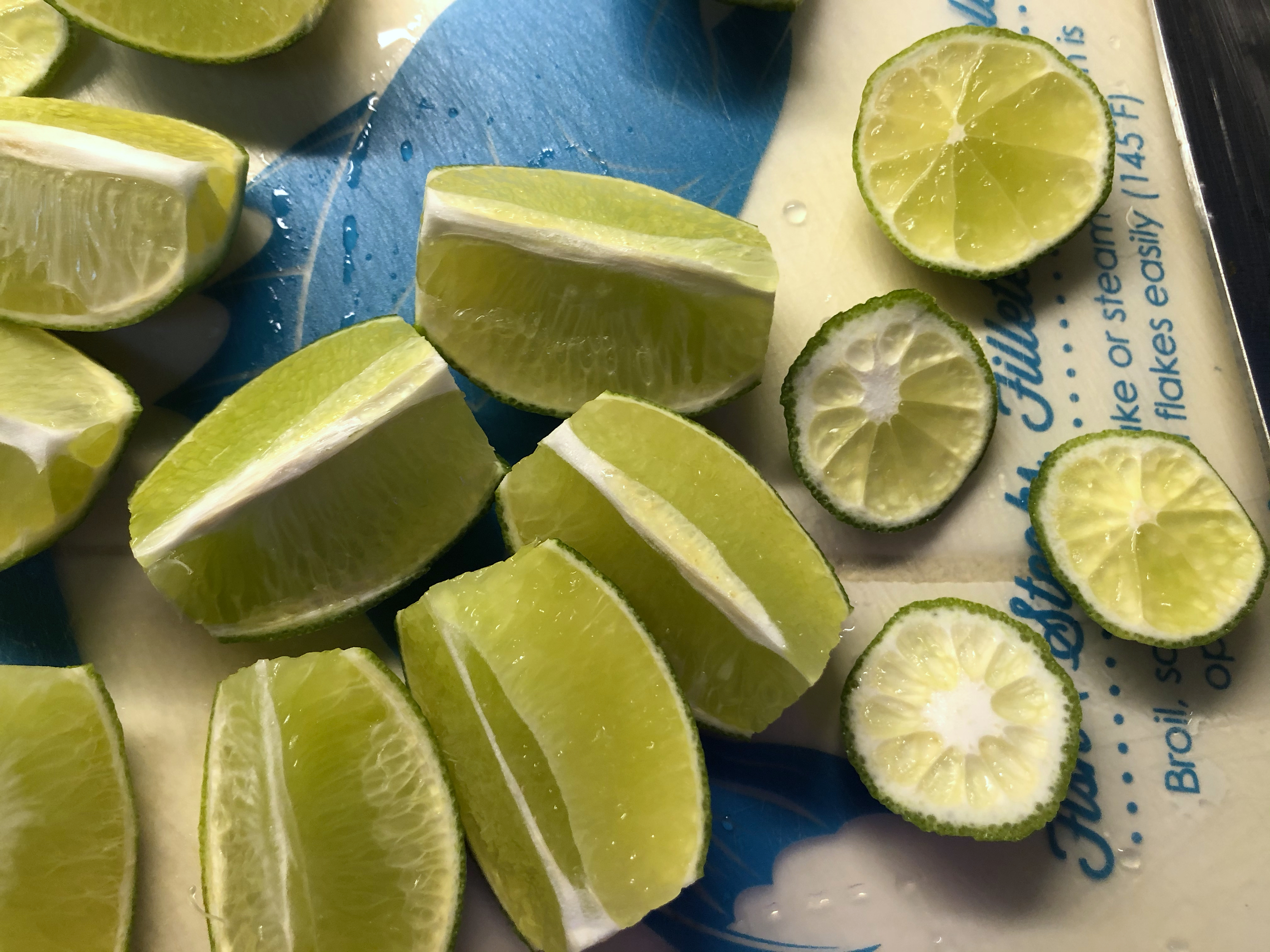
An overhead view of several limes cut into halves and quarters. The limes are placed atop a vintage-looking blue and cream package reading "Fisk Steaks Fillets", with other text obscured.
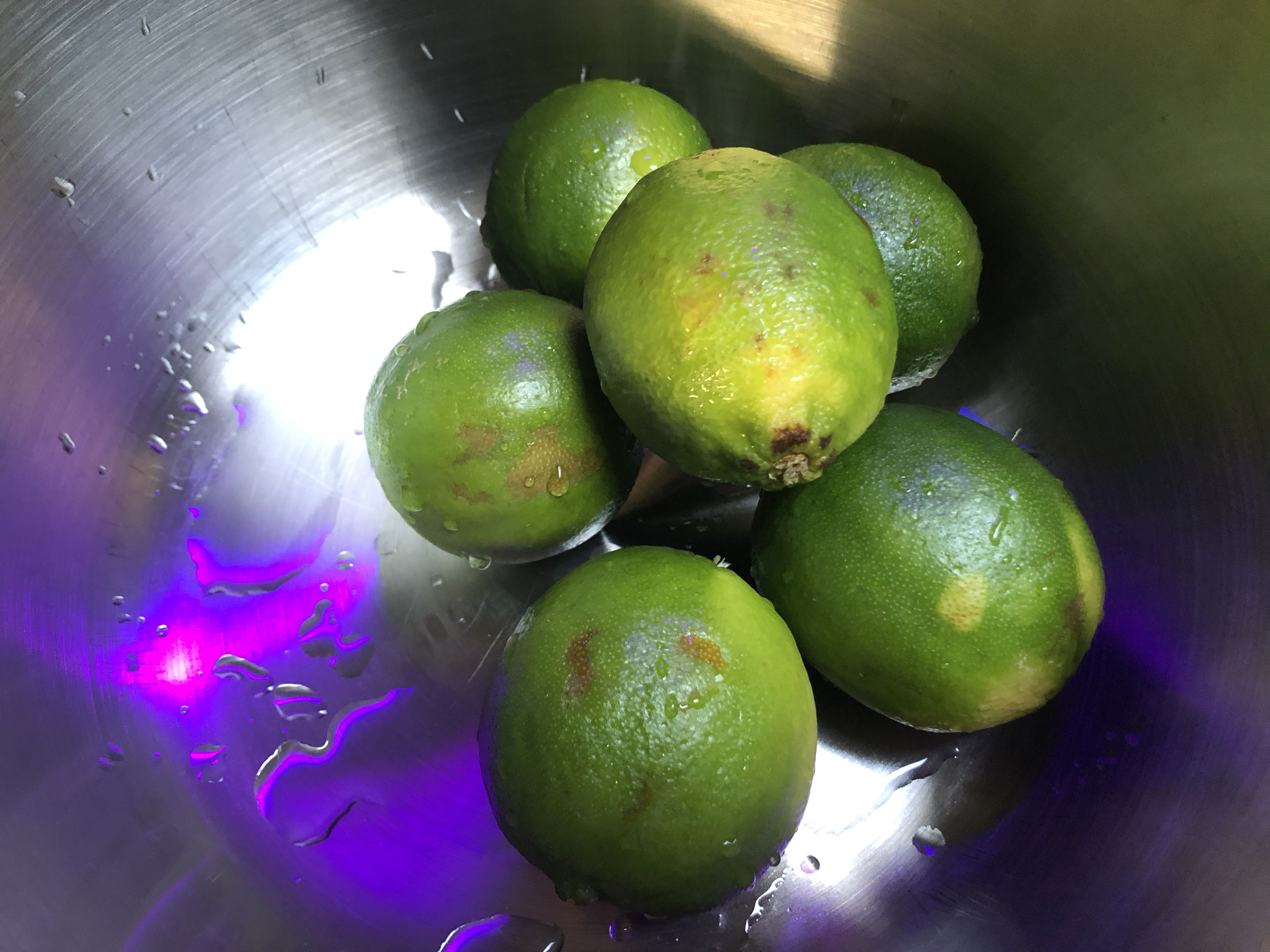
An overhed view of six whole limes in a steel bowl. The light reflects blueish-purple off one interior curve of the bowl.
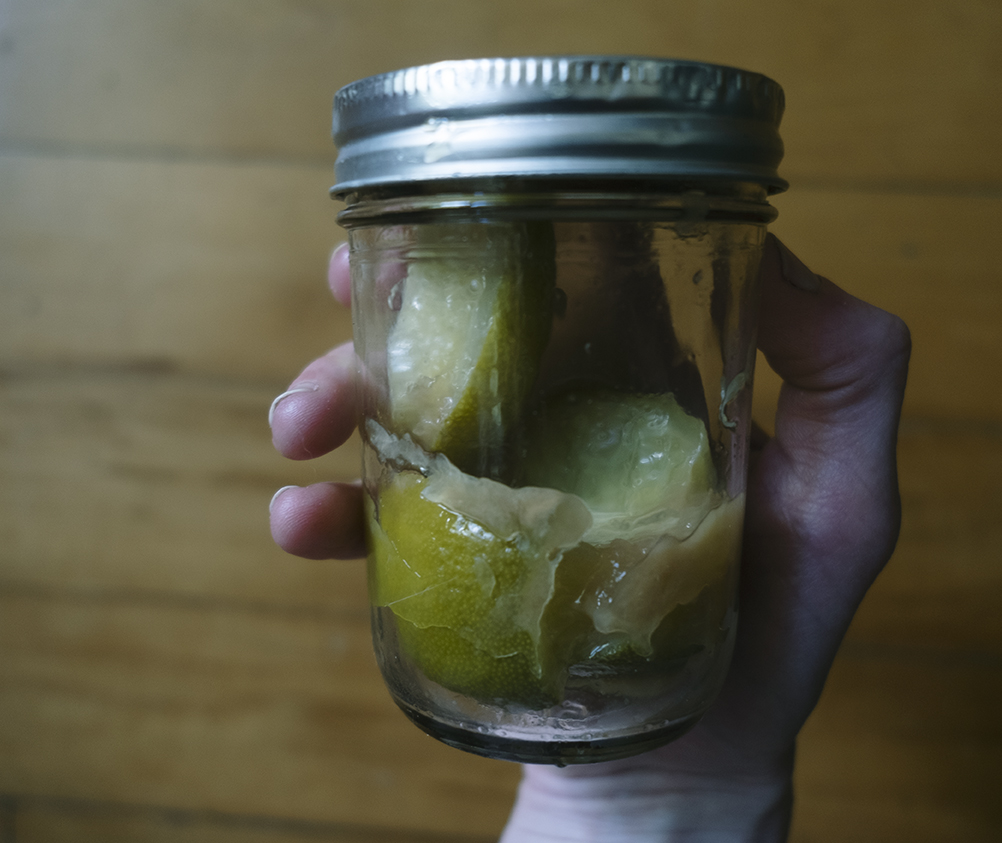
Looking down at one hand holding a glass jar half-full of pickled limes and brine, above a wood floor.
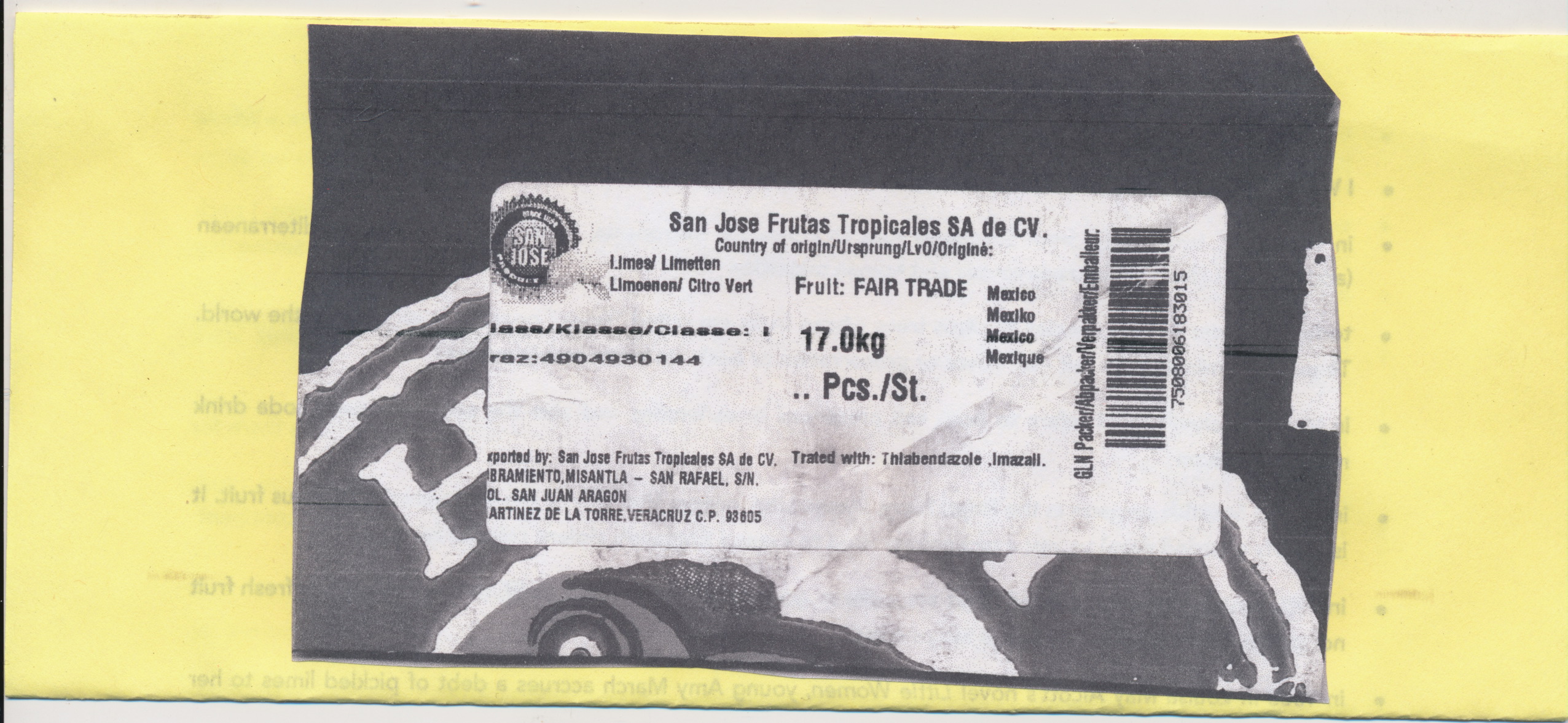
A black and white Xerox of the shipping label for limes on a pale yellow background; the text reads "San Juan Frutes Tropicales; Fair Trade; Mexico," from Veracruz.
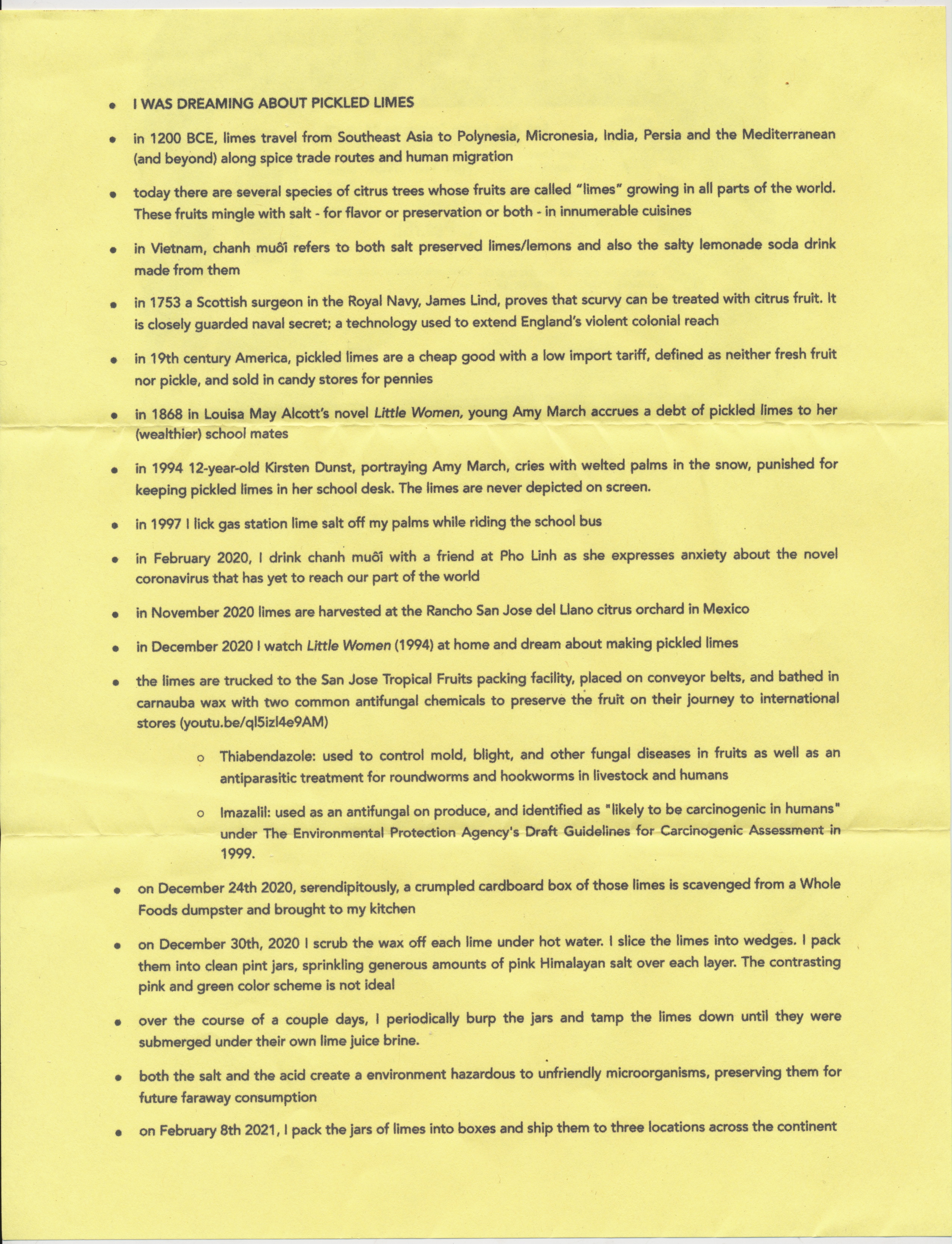
• I WAS DREAMING ABOUT PICKLED LIMES • in 1200 BCE, limes travel from Southeast Asia to Polynesia, Micronesia, India, Persia and the Mediterranean (and beyond) along spice trade routes and human migration. • today there are several species of citrus trees whose fruits are called "limes" growing in all parts of the world. These fruits mingle with salt - for flavor or preservation or both - in innumerable cuisines. • in Vietnam, chanh muối refers to both salt preserved limes/lemons and also the salty lemonade soda drink made from them. • in 1753, a Scottish surgeon in the Royal Navy, James Lind, proves that scurvy can be treated with citrus fruit. It is closely guarded naval secret; a technology used to extend England's violent colonial reach. • in 19th century America, pickled limes are a cheap good with a low import tariff, defined as neither fresh fruit nor pickle, and sold in candy stores for pennies. • in 1868, in Louisa May Alcott's novel Little Women, young Amy March accrues a debt of pickled limes to her (wealthier) school mates. • in 1994, 12-year-old Kirsten Dunst, portraying Amy March, cries with welted palms in the snow, punished for keeping pickled limes in her school desk. The limes are never depicted on screen. • in 1997, I lick gas station lime salt off my palms while riding the school bus. • in February 2020, I drink chanh muối with a friend at Pho Linh as she expresses anxiety about the novel coronavirus that has yet to reach our part of the world. • in November 2020, limes are harvested at the Rancho San Jose del Llano citrus orchard in Mexico. • in December 2020, I watch Little Women (1994) at home and dream about making pickled limes. • the limes are trucked to the San Jose Tropical Fruits packing facility, placed on conveyor belts, and bathed in carnauba wax with two common antifungal chemicals to preserve the fruit on their journey to international stores (youtu.be/q151z14e9AM)       o Thiabendazole: used to control mold, blight, and other fungal diseases in fruits as well as an antiparasitic treatment for roundworms and hookworms in livestock and humans.       o Imazalil: used as an antifungal on produce, and identified as "likely to be carcinogenic in humans" under The Environmental Protection Agency's Draft Guidelines for Carcinogenic Assessment in 1999. • on December 24th 2020, serendipitously, a crumpled cardboard box of those limes is scavenged from a Whole Foods dumpster and brought to my kitchen. • on December 30th, 2020 I scrub the wax off each lime under hot water. I slice the limes into wedges. I pack them into clean pint jars, sprinkling generous amounts of pink Himalayan salt over each layer. The contrasting pink and green color scheme is not ideal. • over the course of a couple days, I periodically burp the jars and tamp the limes down until they were submerged under their own lime juice brine. • both the salt and the acid create a environment hazardous to unfriendly microorganisms, preserving them for future faraway consumption. • on February 8th 2021, I pack the jars of limes into boxes and ship them to three locations across the continent.
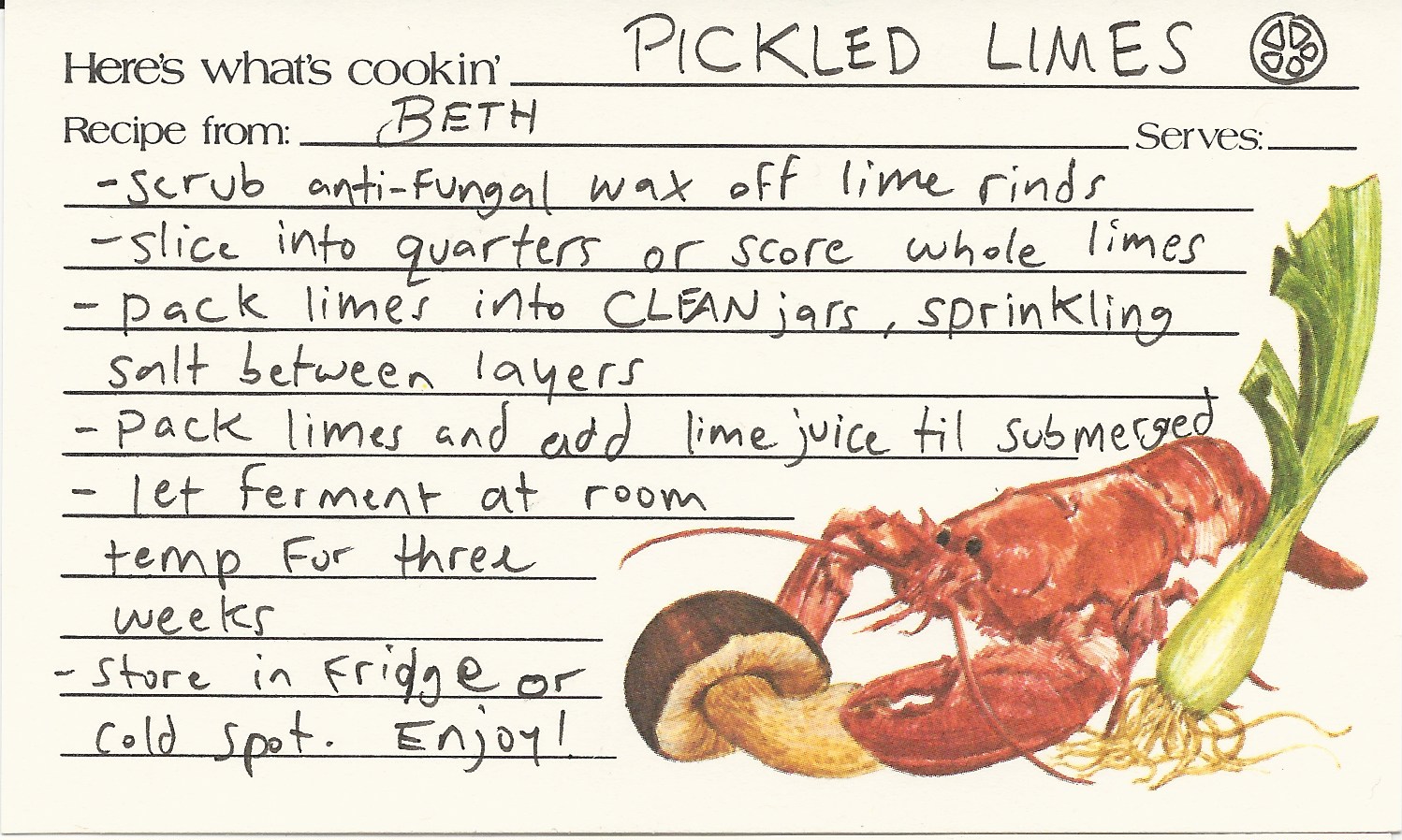
Recipe card reading: "PICKLED LIMES: Scrub anti-fungal wax off lime rinds. Slice into quarters or score whole limes. Pack limes into clean jars, sprinkling salt between layers. Pack limes and add lime juice til submerged. Let ferment at room temperature for three weeks. Store in fridge or cold spot. Enjoy!"